武当活骨功, also known as Wudang Huo Gu Gong, is one of those practices that cannot truly be understood through observation alone. At first glance, the movements may seem simple, almost immediately accessible. Yet once you genuinely enter the practice, something changes: the body slows down, the breath becomes more present, the joints begin to loosen, and the mind gradually settles.
At Wudang, some methods are not solely focused on external performance. Their purpose is to awaken the body from within. The term 活骨 can be understood as the idea of “bringing life to the bones” or restoring movement to the body’s internal structure. It is not simply about stretching muscles or reproducing a sequence of movements. Rather, it is about rediscovering a more natural connection between breathing, posture, the joints, and intention.
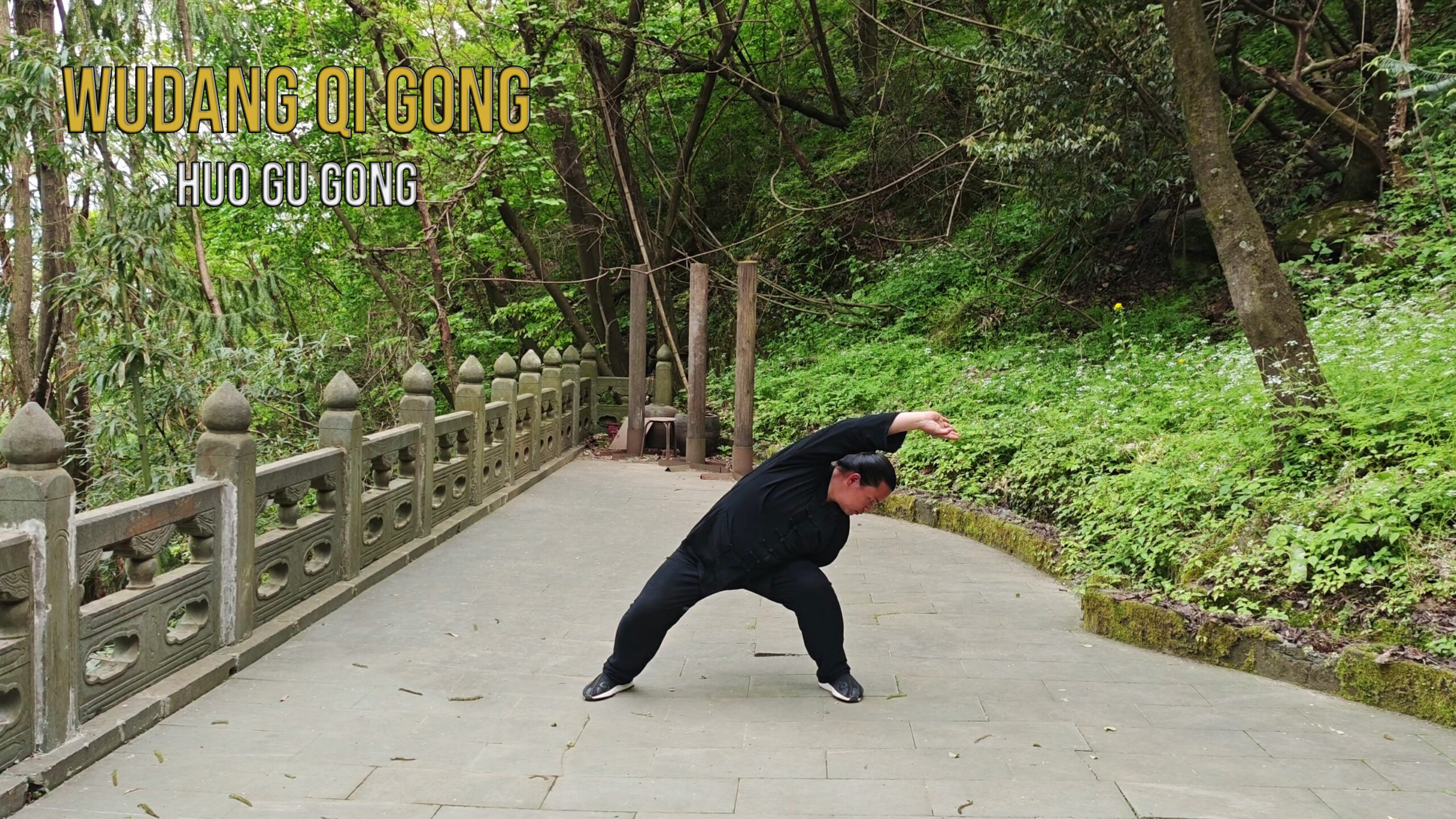
This Wudang Taoist Qi Gong routine is taught according to the teachings of Chen Dong and consists of five fundamental movements: 混元一气, 左右弯弓, 旋转乾坤, 吐故纳新, and 灵猴缩身. Each movement follows its own logic, rhythm, and unique way of transforming the body.
A Taoist Practice for Awakening the Body’s Structure
Huo Gu Gong is much more than a slow exercise routine. Within the tradition of Chinese internal arts, movement is never limited to its external form. What we see is only part of the work. The true essence lies in the quality of relaxation, the way the spine supports each movement, the breath that guides the rhythm, and the gradual sensation of a body rediscovering space and freedom.
Through this practice, the body learns to move without force or aggression. Tension is not fought directly; it is gradually released. The shoulders soften, the hips open, the waist becomes more mobile, and the breath begins to accompany every transition. This approach reflects a core principle found throughout the internal arts of Wudang: true strength comes not from rigidity, but from connection and fluidity.
混元一气 — Hun Yuan Yi Qi: Returning to Unified Breath
The first movement, 混元一气, can be understood as a return to the unity of breath. In Taoist philosophy, 混元 refers to the original state before separation, before unnecessary tension and opposition arise. 一气 literally means “one breath” or “one unified qi.” This movement opens the practice by guiding the body toward a calmer, more centered, and more unified state.
At the beginning, the goal is not to achieve maximum range of motion. The most important thing is to cultivate presence. The body slows down, the shoulders relax, the gaze softens, and the breath settles naturally. This movement acts as a gateway, allowing practitioners to leave external distractions behind and enter a genuine state of practice.
This foundation is essential because without it, the movements that follow can easily remain mechanical. Huo Gu Gong requires the entire body to move as one integrated unit rather than as separate parts. From this very first exercise, posture, breath, and intention are brought together in the same direction.
左右弯弓 — Zuo You Wan Gong: The Bow Bending to the Left and Right
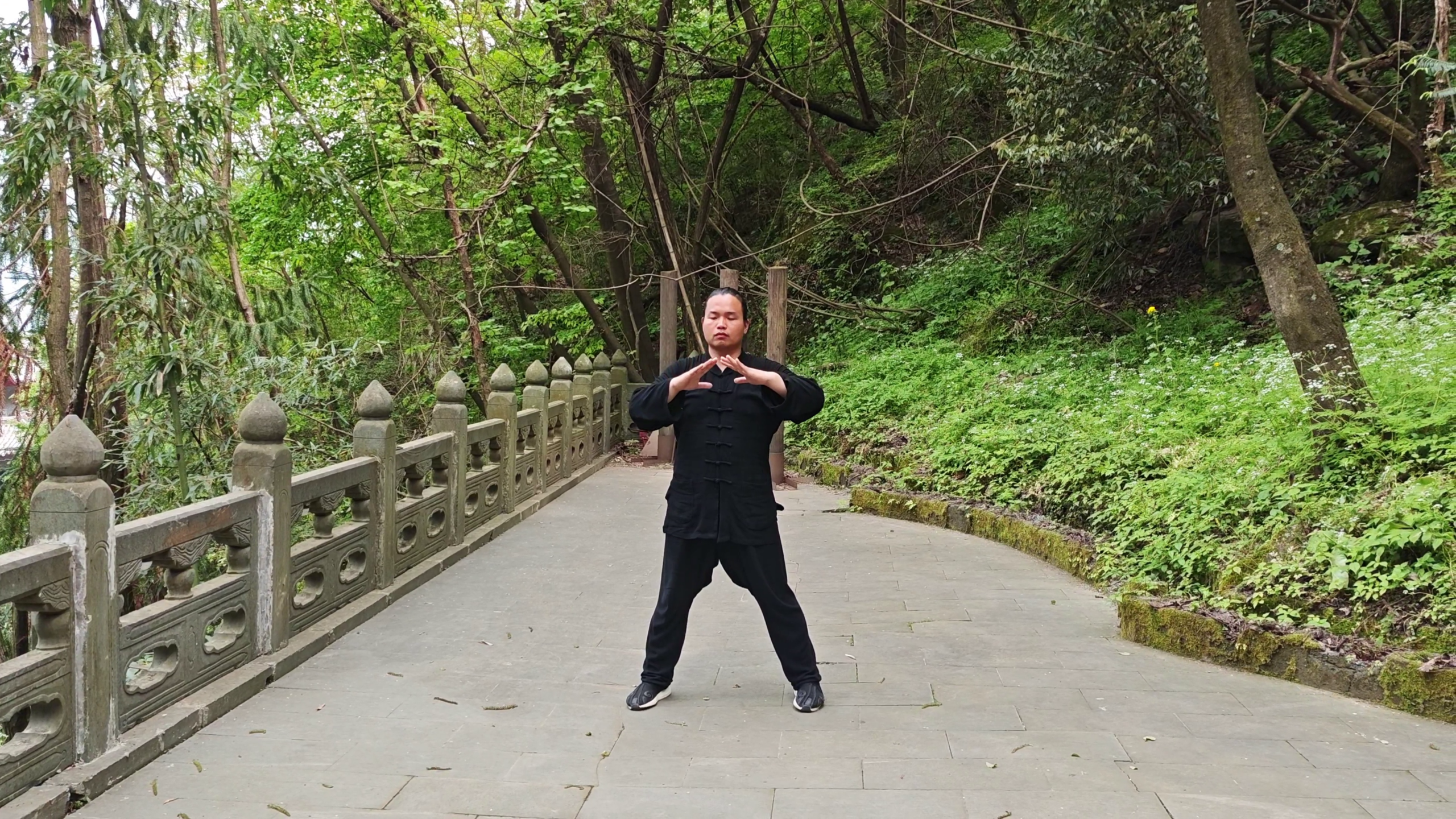
With 左右弯弓, the body begins to open more fully. The image of the bow is particularly meaningful because it represents living tension. A bow is not rigid, yet it is not soft either. It possesses elasticity, direction, and the ability to bend while maintaining its structure. This is precisely what this movement seeks to develop within the body.
The lateral bends mobilize the sides of the torso, the shoulders, the waist, and the spine. Practitioners learn to open without forcing, to stretch without breaking their structure, and to breathe through the movement rather than holding the breath. Gradually, the sides of the body become more available, and breathing feels freer and deeper.
In a modern context, this movement could be seen as a simple lateral mobility exercise. However, within the tradition of Wudang Qi Gong, it carries a deeper meaning. It helps restore continuity between the upper and lower body, between openness and stability, and between movement and rootedness.
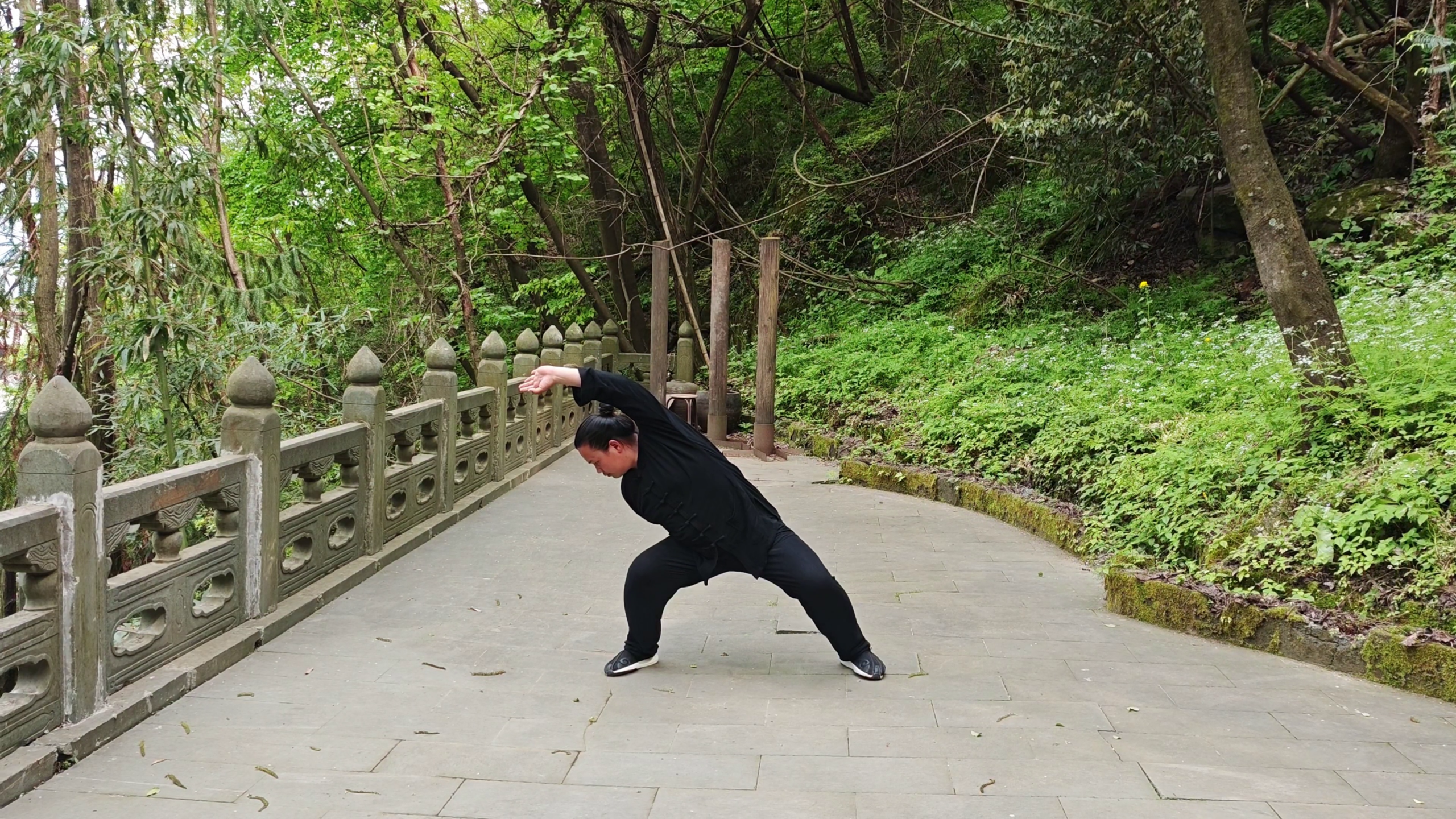
旋转乾坤 — Xuan Zhuan Qian Kun: Turning Heaven and Earth
The third movement, 旋转乾坤, introduces the principle of rotation. The term 乾坤 symbolically represents Heaven and Earth within Chinese culture. Through this imagery, the movement encourages the body to restore circulation between above and below, inside and outside, stability and motion.
Here, the waist, pelvis, shoulders, and spine begin to work together as a unified whole. Circular movement is essential in the internal arts because it allows tension to be released without breaking the body’s structure. It transforms tension into rotation and encourages movement to flow rather than become blocked. As the practice becomes more natural, practitioners often notice that the arms no longer move independently; they are guided by the body’s center.
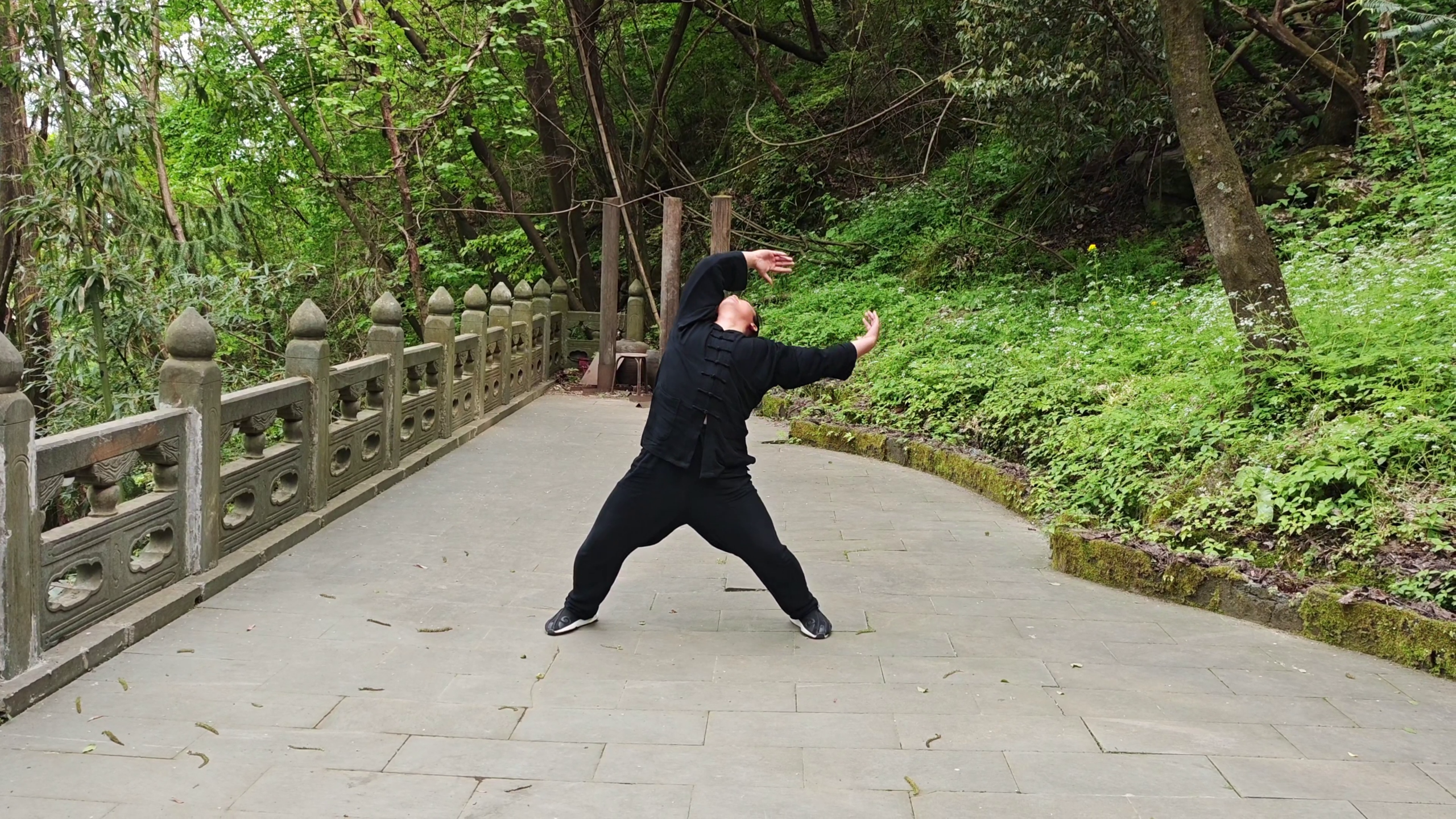
吐故纳新 — Tu Gu Na Xin: Releasing the Old, Embracing the New
The fourth movement, 吐故纳新, is deeply connected to breathing. This Chinese expression literally means “expel the old and welcome the new.” In traditional Chinese health practices, it refers to letting go of what has become stagnant in order to make space for new breath, renewed energy, and a refreshed internal state.
In this movement, breathing is not a secondary detail—it becomes the heart of the practice. With each exhalation, the body releases unnecessary tension. With each inhalation, it regains space and openness. Although this work may appear simple, it requires a great deal of awareness. If you force the movement, it loses its quality. If you relax too much, it loses its structure. The art lies in finding the right balance.
This movement highlights an essential principle of Taoist practice: breathing is more than simply taking air in and out. Breathing transforms one’s internal state. It calms the rhythm of the body, opens the chest, relaxes the mind, and allows the body to regain a sense of availability and ease.
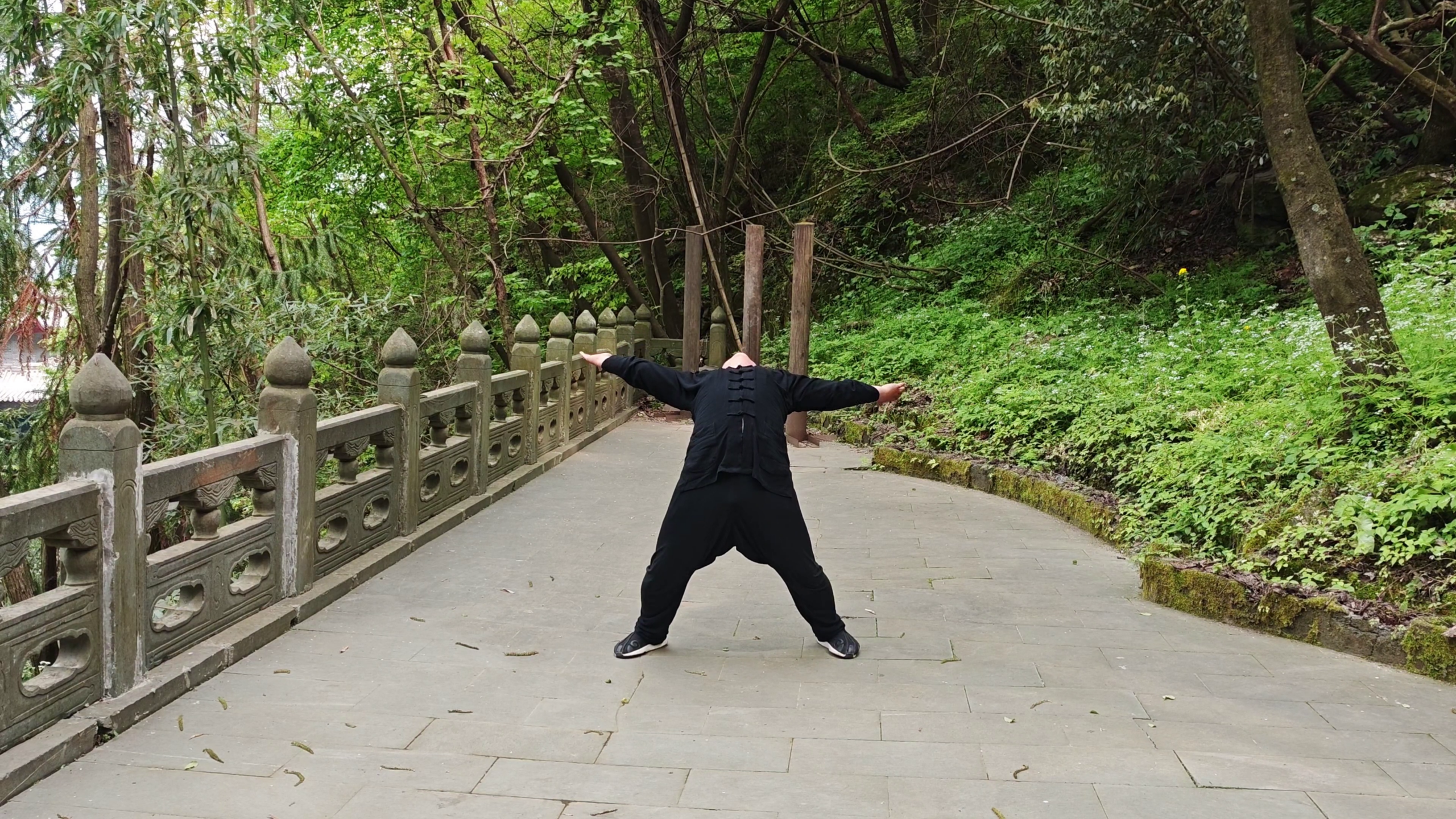
灵猴缩身 — Ling Hou Suo Shen: The Spiritual Monkey Contracts the Body
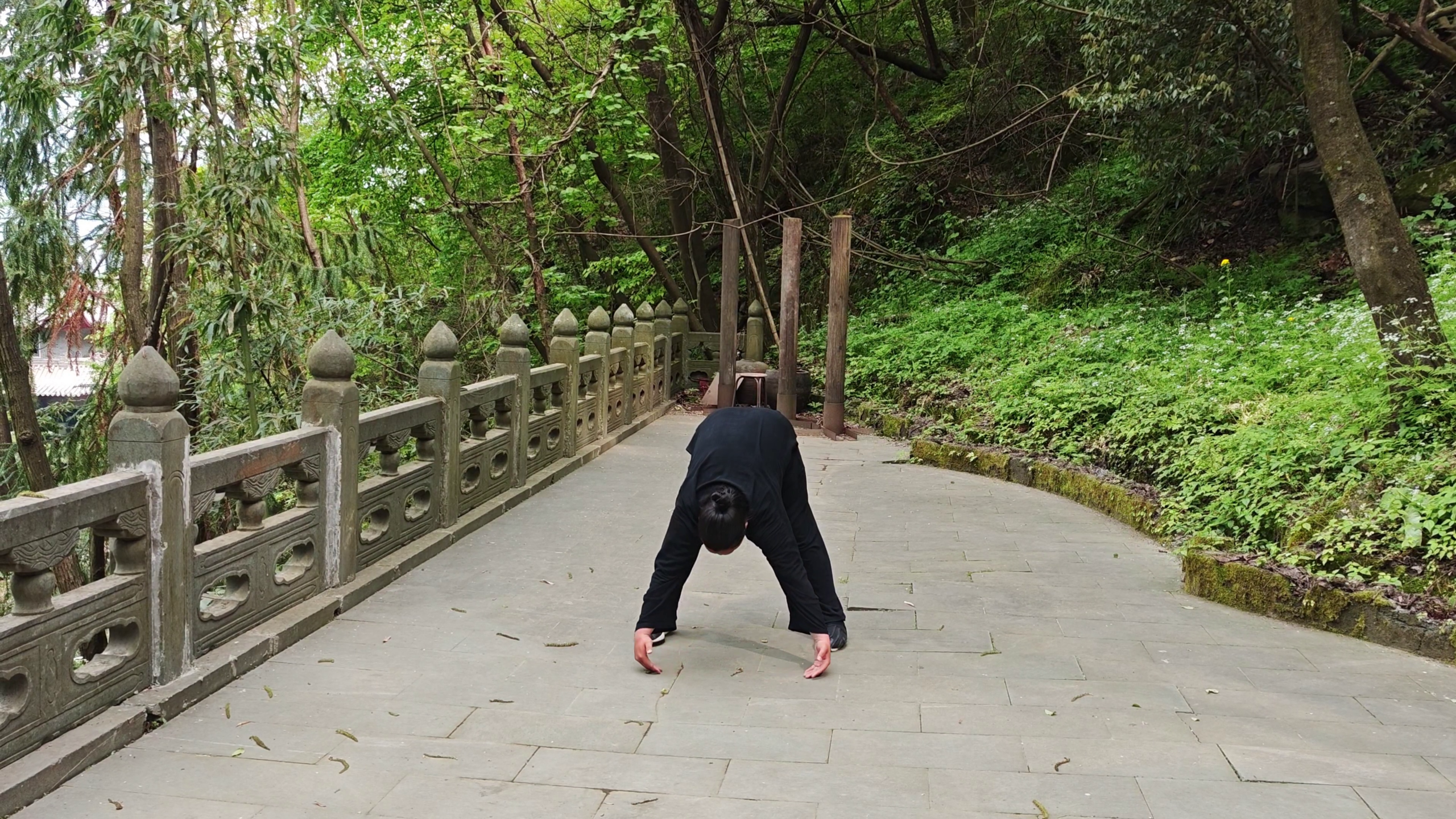
The final movement, 灵猴缩身, carries a different energy. The monkey occupies a special place in Chinese martial culture, symbolizing agility, alertness, instinct, and adaptability. In this movement, the body gathers inward, contracts, and then relaxes once again. After the opening movements, rotations, and breathing work, this final stage brings the practice back to something denser and more internal.
The contraction of the body mobilizes the spine, hips, legs, and deep muscular chains. The movement requires both flexibility and control. The goal is not to collapse inward but to gather and unify the body’s structure. This ability to condense the body is important within the Chinese internal arts, where power is not merely muscular but emerges from whole-body connection.
This final movement naturally concludes the routine. The body has opened, rotated, breathed, and gathered itself once more. The practice ends with a different feeling from where it began: greater presence, more internal warmth, deeper calm, and sometimes even the sensation of being both lighter and more rooted at the same time.
Why Practice Wudang Huo Gu Gong?
Huo Gu Gong can be approached as a mobility routine, but it becomes far more meaningful when practiced through the lens of the internal arts. Its purpose is not simply to increase flexibility. It teaches a different way of moving. It invites practitioners to slow down, listen, breathe, and feel the connections between the joints, the spine, and the body’s center.
In a world that constantly encourages speed and intensity, this type of practice offers a different perspective. Progress does not come from adding more force, but from gradually removing what blocks natural movement. Unnecessary tension, shallow breathing, tight shoulders, and fragmented movement become increasingly visible—and therefore easier to transform.
This is why Wudang Huo Gu Gong can appeal both to martial artists and to those seeking a gentler, more mindful, and deeper practice. It creates a bridge between health, Chinese culture, internal movement, and Taoist transmission.
A Practice That Appears Simple Yet Reveals Great Depth
武当活骨功 does not need to be spectacular to be powerful. Its strength lies precisely in its apparent simplicity. Five movements, one breath, sustained attention, and a body that gradually learns to release itself.
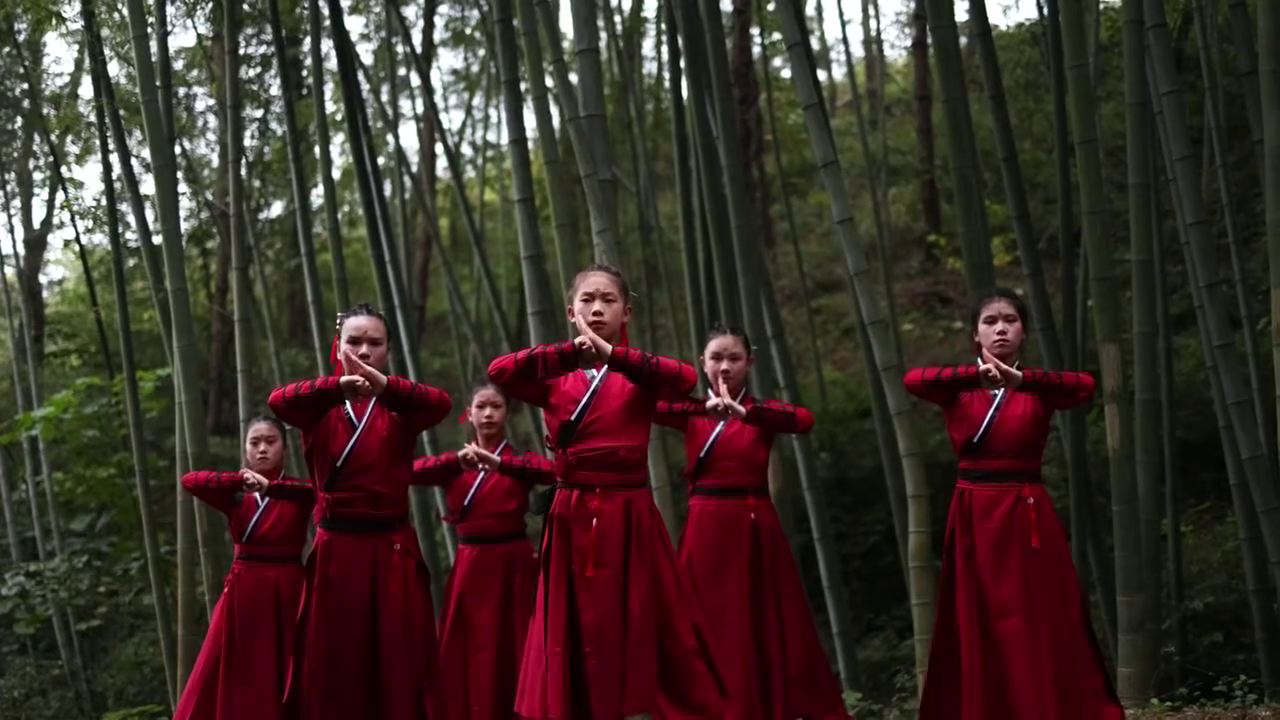
At Wudang, this type of practice exists within a broader environment: the mountains, the temples, daily training, Taoist culture, and the direct transmission between teachers and students. When watching the video, we are not simply observing a sequence of movements. We are witnessing a way of practicing, an atmosphere, and a connection between the body and the place itself.
Over time, practitioners come to understand that the goal is not to “master” the movement once and for all. The goal is to return to it again and again until the body becomes more available, more fluid, and more alive.
Wudang Huo Gu Gong is an invitation to awaken the body without forcing it, to breathe more deeply, and to rediscover a sense of inner calm through movement.
🎥 The Complete Wudang Huo Gu Gong Routine
This video presents the complete 武当活骨功 (Wudang Huo Gu Gong) routine as it is taught here in Wudang through the teachings of Chen Dong.
Beyond the movements themselves, this practice seeks to cultivate a different relationship with the body, the breath, and one’s internal rhythm. Each movement follows its own logic, yet together they form a continuous flow in which breathing, structure, and relaxation develop in harmony.
Filmed directly in the Wudang Mountains, this video also captures the unique atmosphere of a place where Taoist internal arts continue to be practiced and transmitted every day.
A practice that appears simple at first glance, yet reveals its true depth through consistent practice over time.