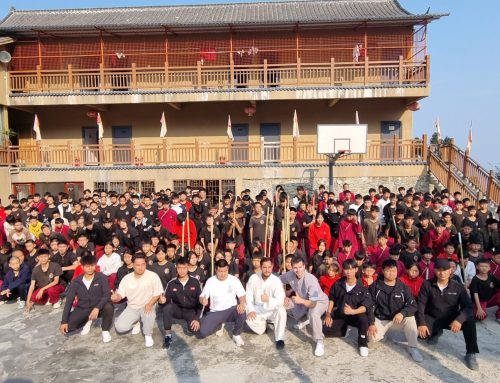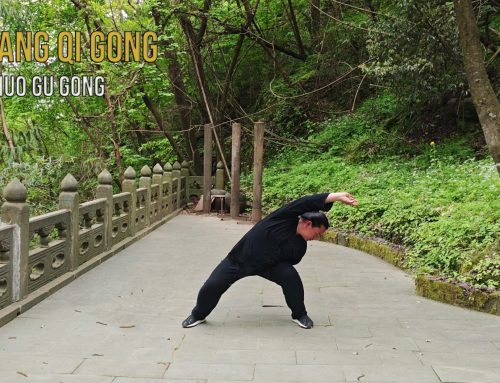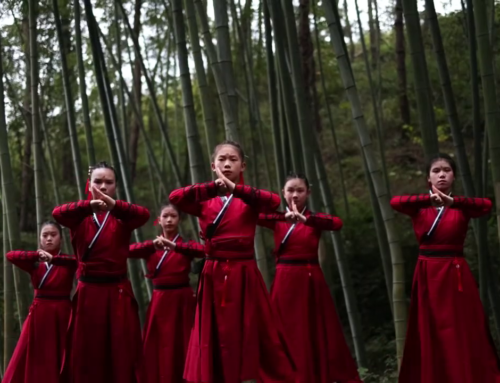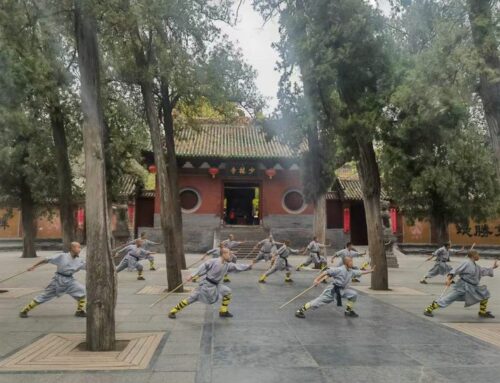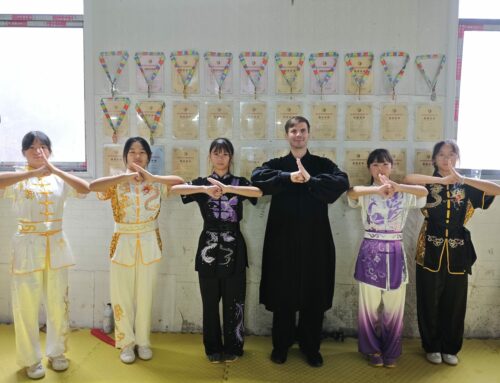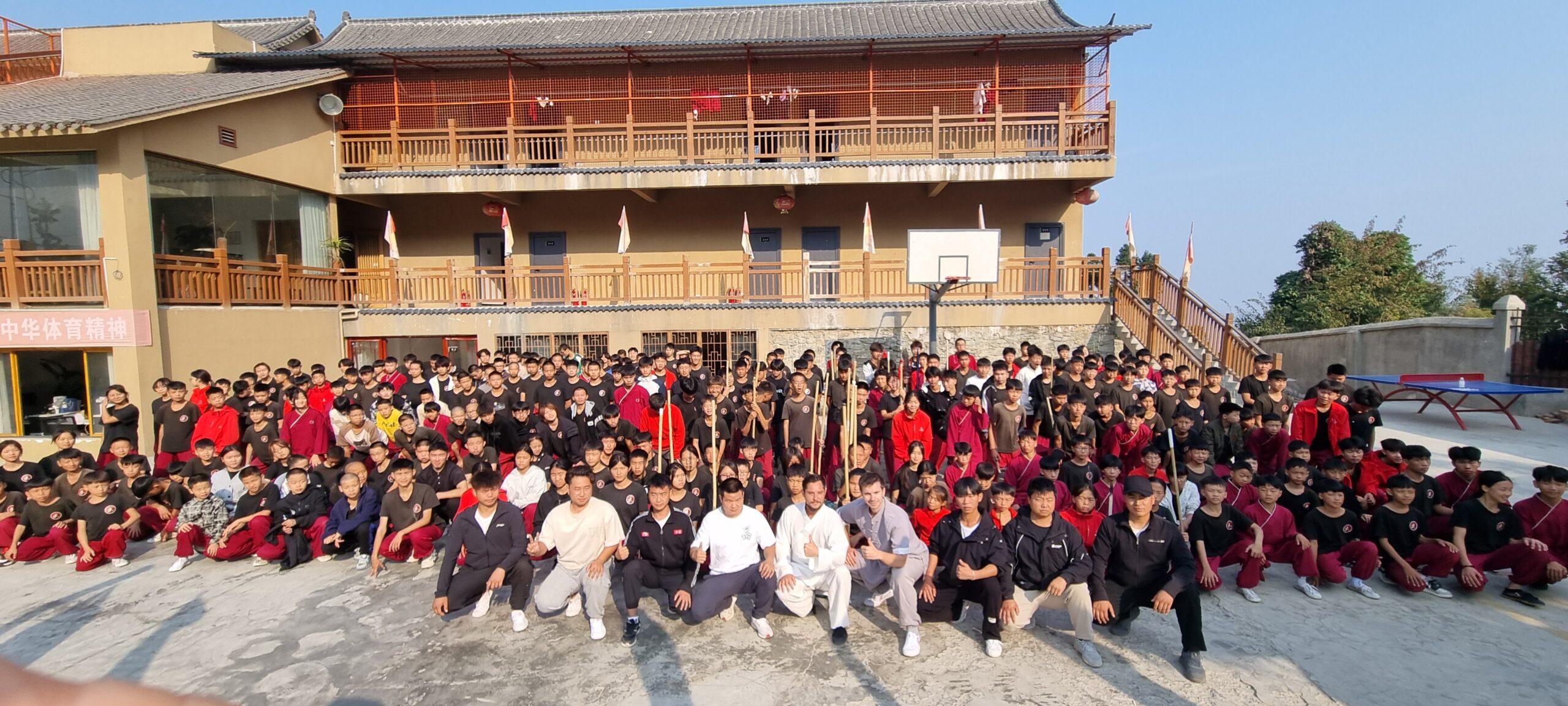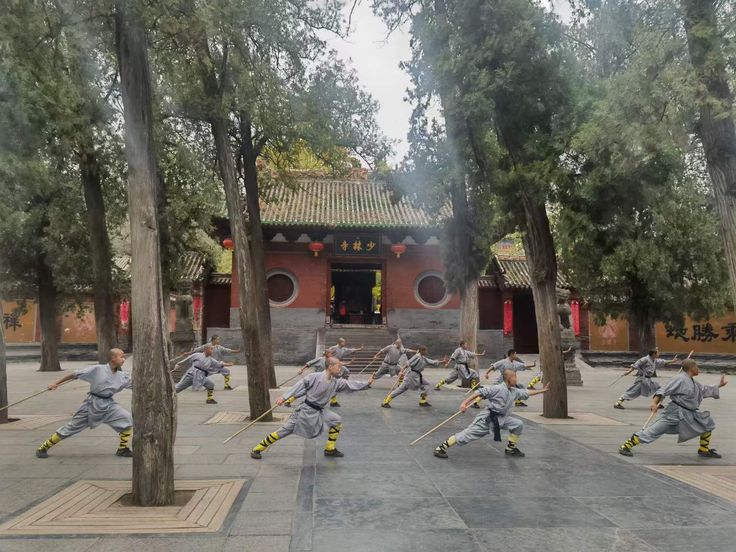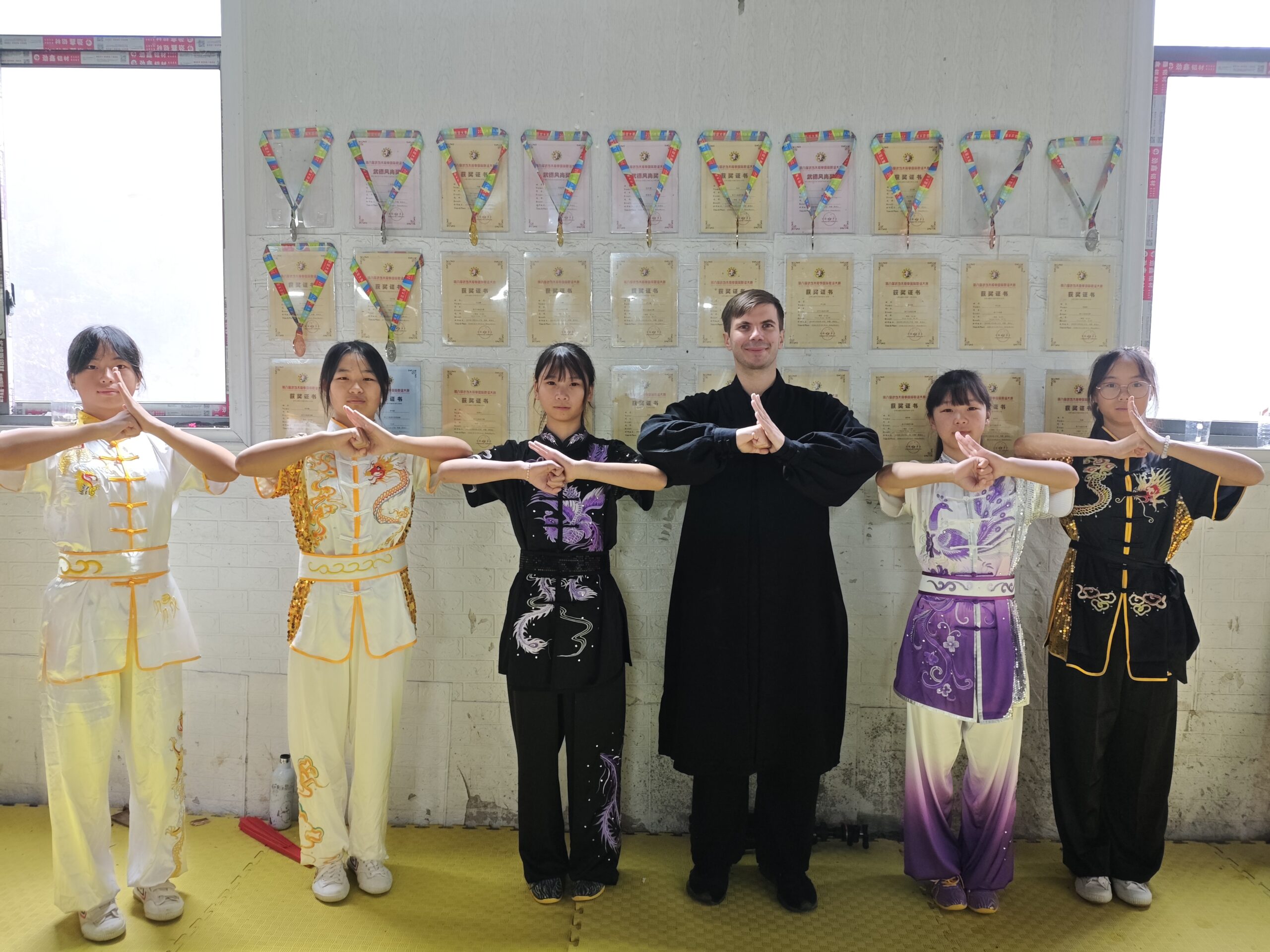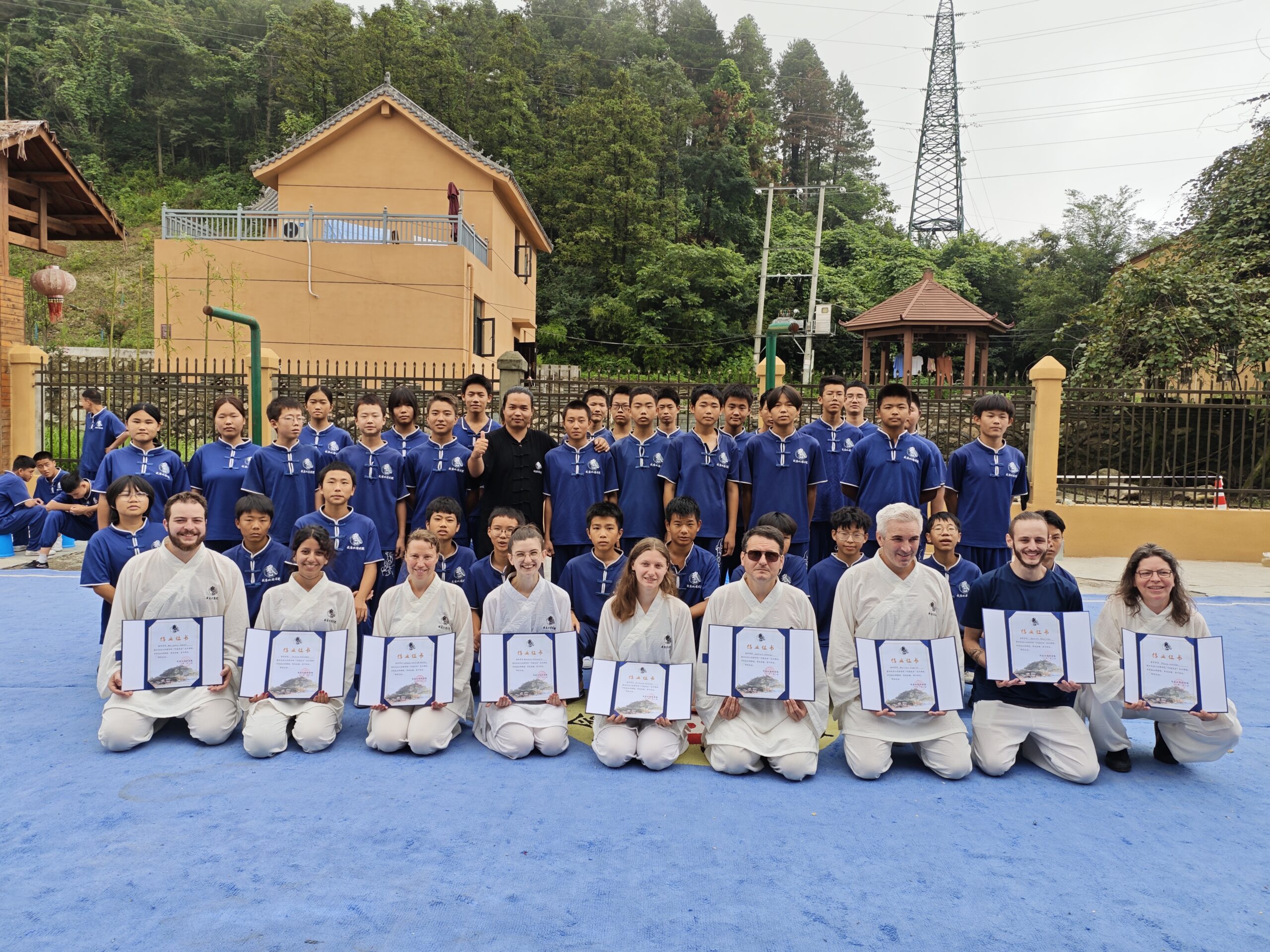
In July 2025, the French school KFAMC (Kung Fu et Arts Martiaux de Chine) crossed continents to return to the source.
The destination: China, in the heart of the Wudang Mountains, a sacred place of internal martial arts and the birthplace of Tai Ji Quan.
Founded around a faithful transmission of traditional Chinese martial arts, KFAMC has trained practitioners of all ages for many years in Kung Fu, Tai Ji and Qi Gong. Their guiding principle is clear: to unite technical discipline, cultural transmission and human values.
Our collaboration did not begin yesterday.
Over the years, exchanges have naturally developed. Seminars have been organized in France. Meetings have taken place between teachers, students and families. A relationship of trust has gradually been built.
Some KFAMC members have followed us since the Shaolin period until our installation in the Wudang Mountains. They share the same vision: Chinese martial arts should not be fragmented but transmitted as a complete system combining the power of combat, the rigor of forms and the depth of internal work.
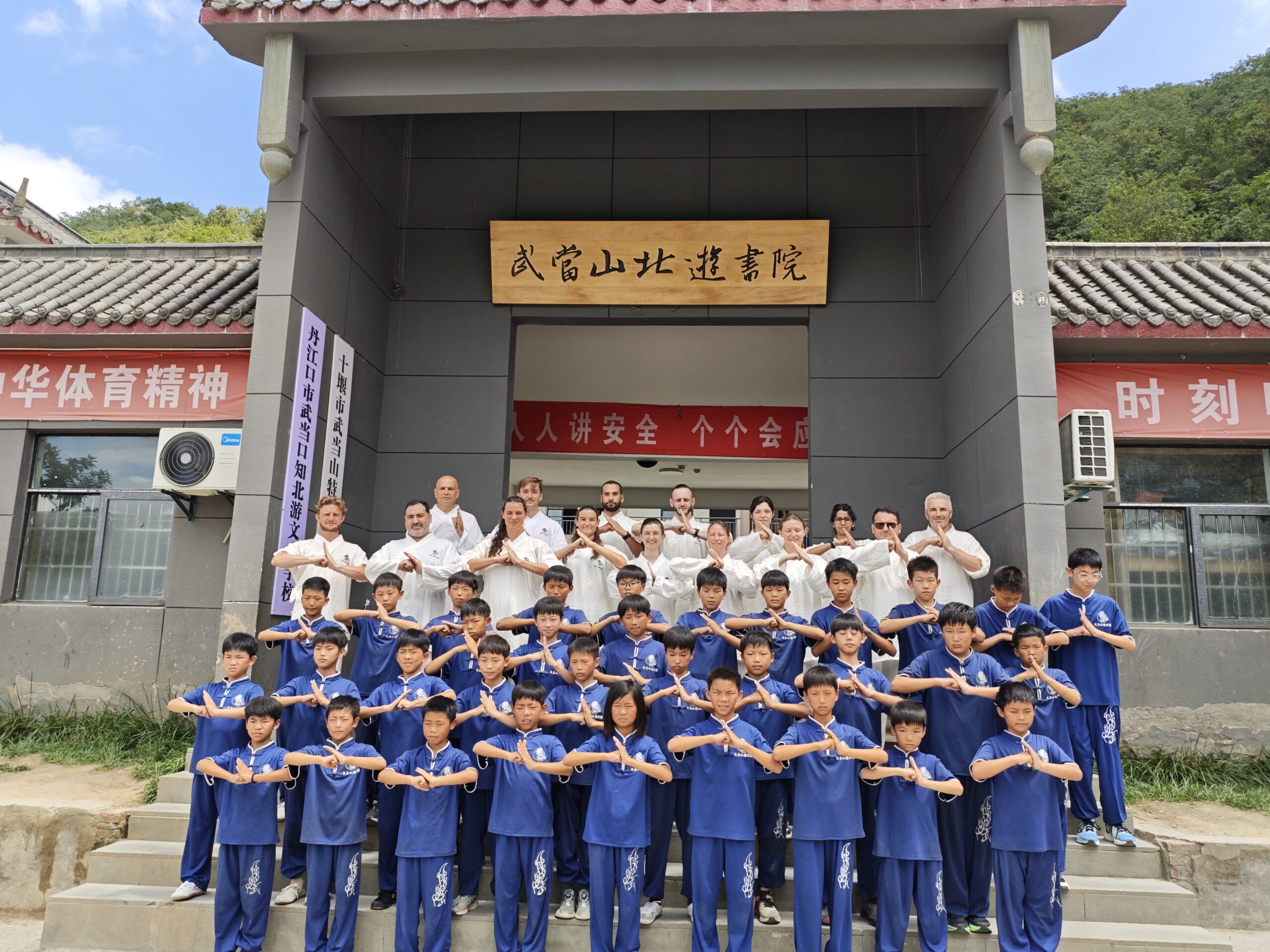
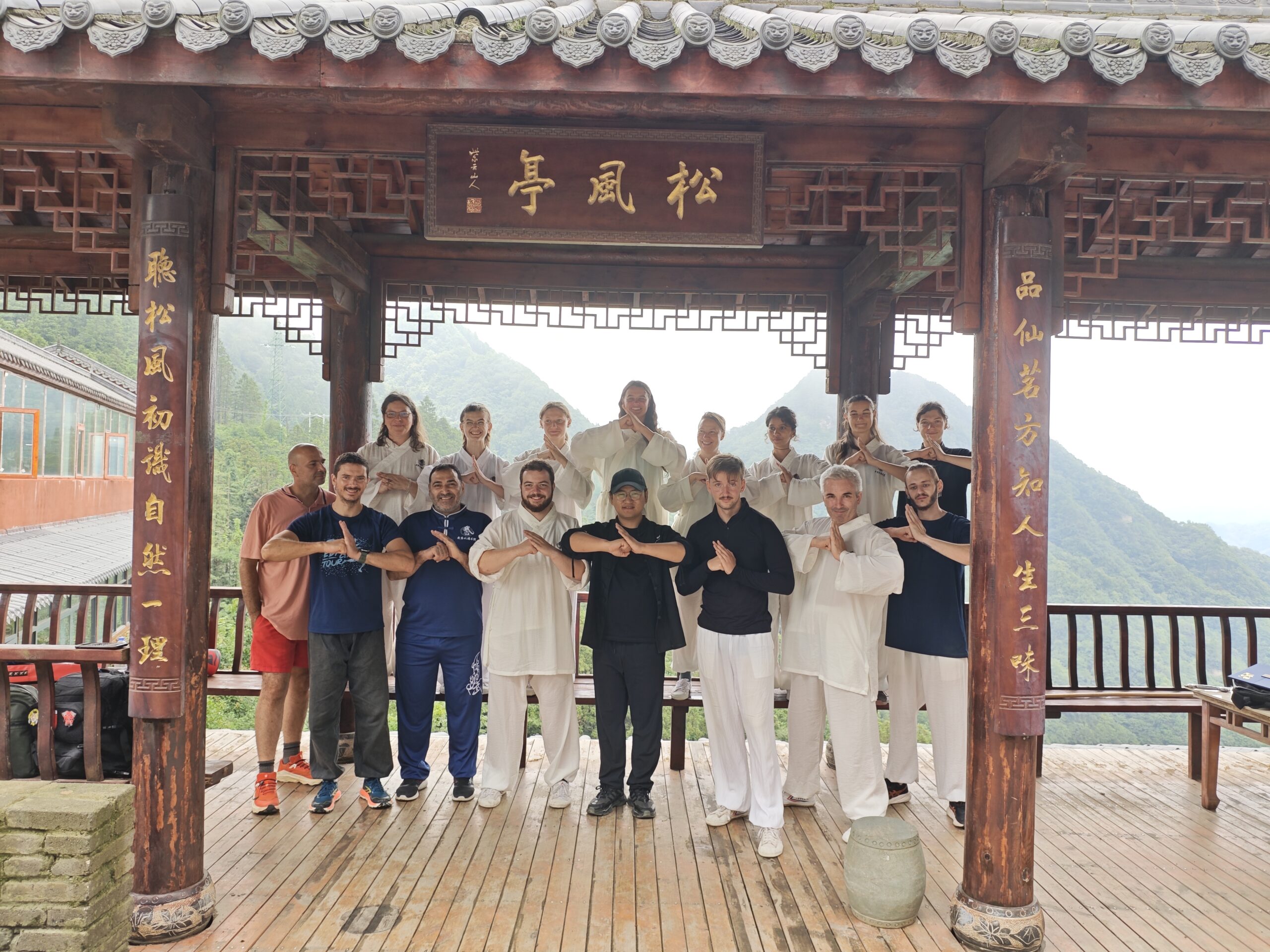
In this spirit, around twenty of their students, aged between 18 and 60, from beginners to experienced practitioners, chose to spend a full month immersed in the Wudang Mountains.
Their goal was not tourism.
It was clear: to take part in a real Kung Fu training in China, integrated into the daily rhythm of a traditional school, alongside local Chinese students.
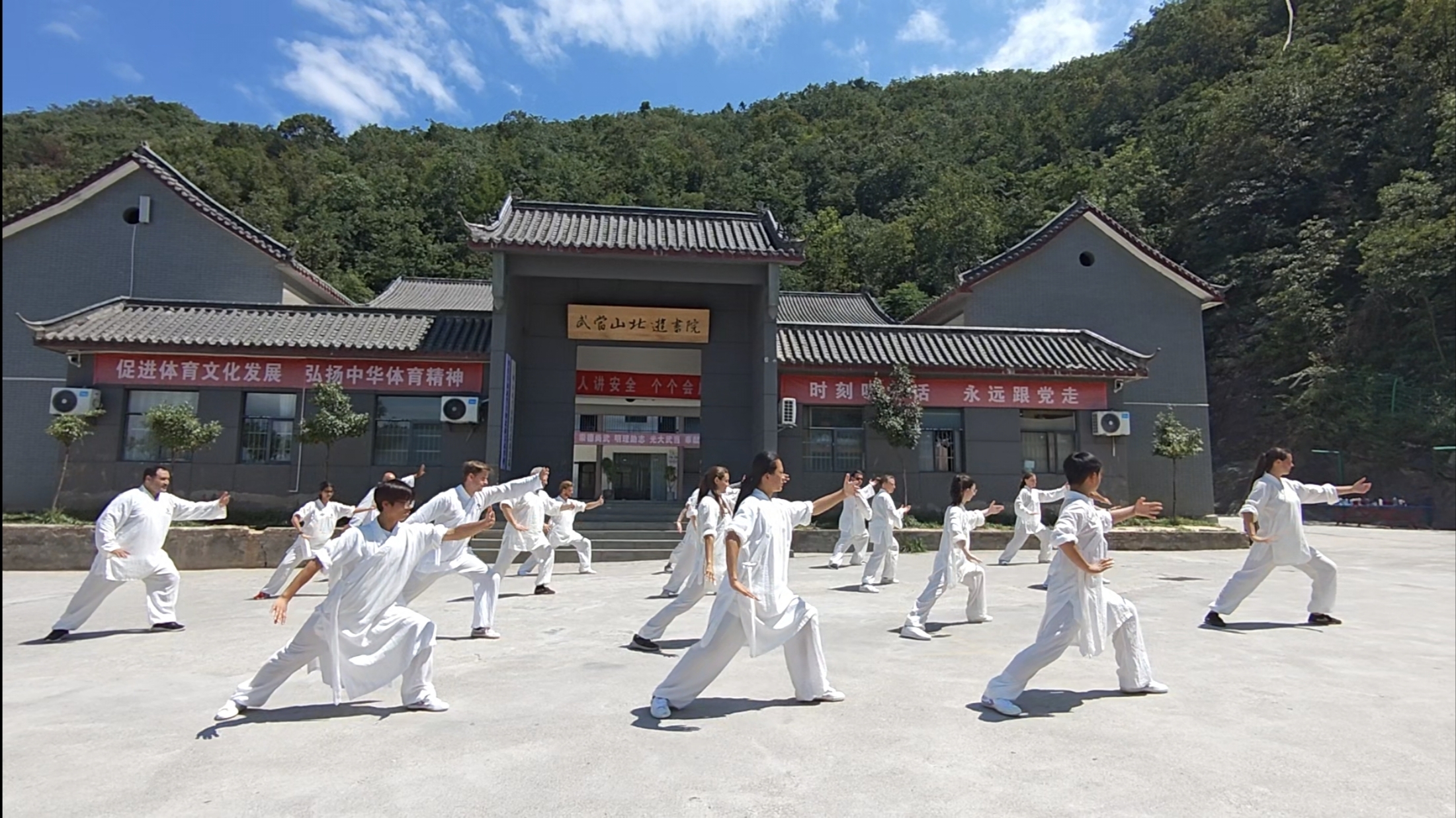
A Real Immersion: Living Like Chinese Students
Unlike many programs where foreign groups remain separate, the French students were fully integrated into the life of the school. There was no separate schedule and no special treatment: they experienced daily life exactly like the Chinese students.
In practical terms, this meant sharing the same living spaces and following the same rhythm of learning:
- Shared dormitories
- Collective meals in the school cafeteria
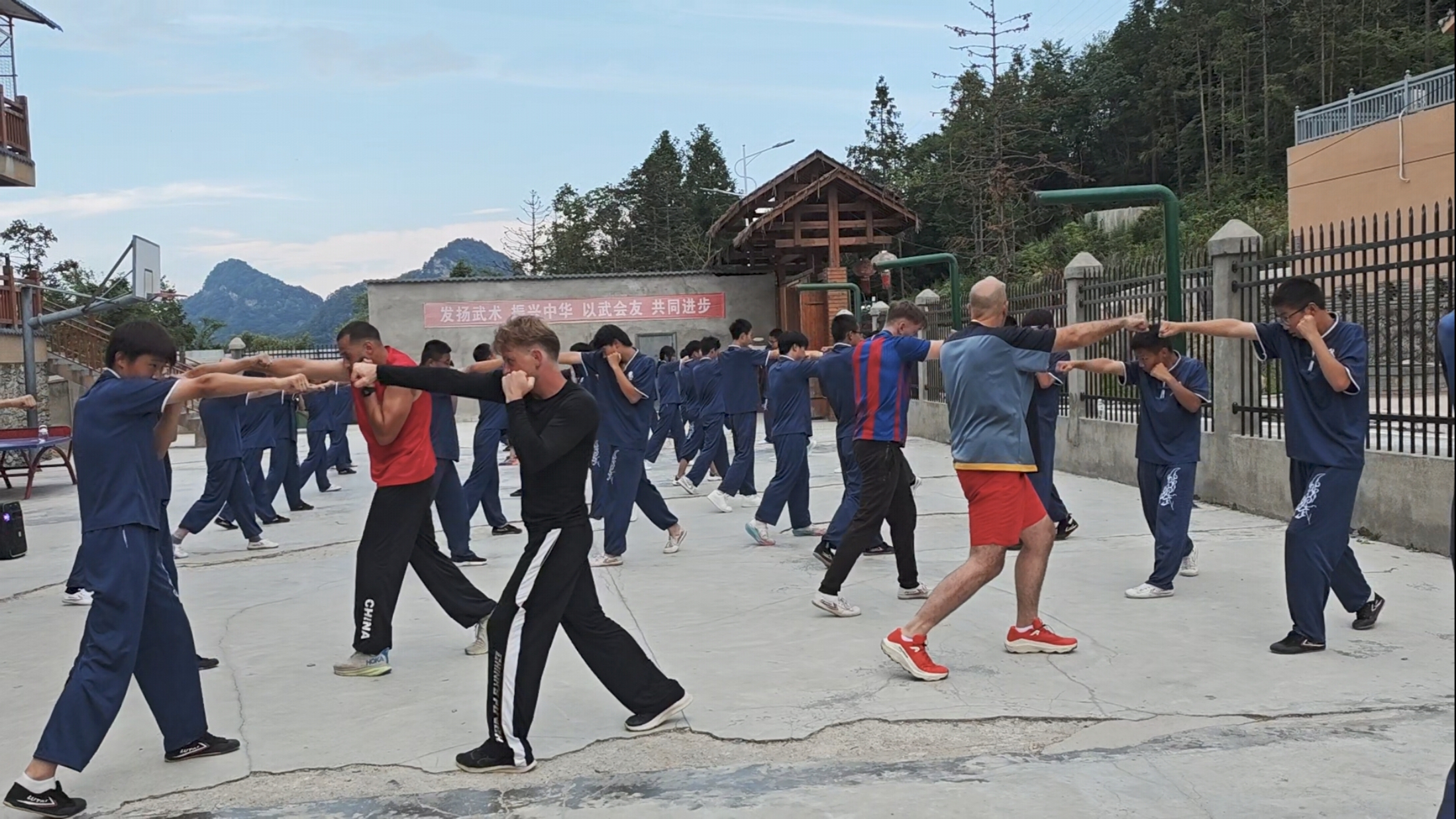
- Training sessions integrated with local classes
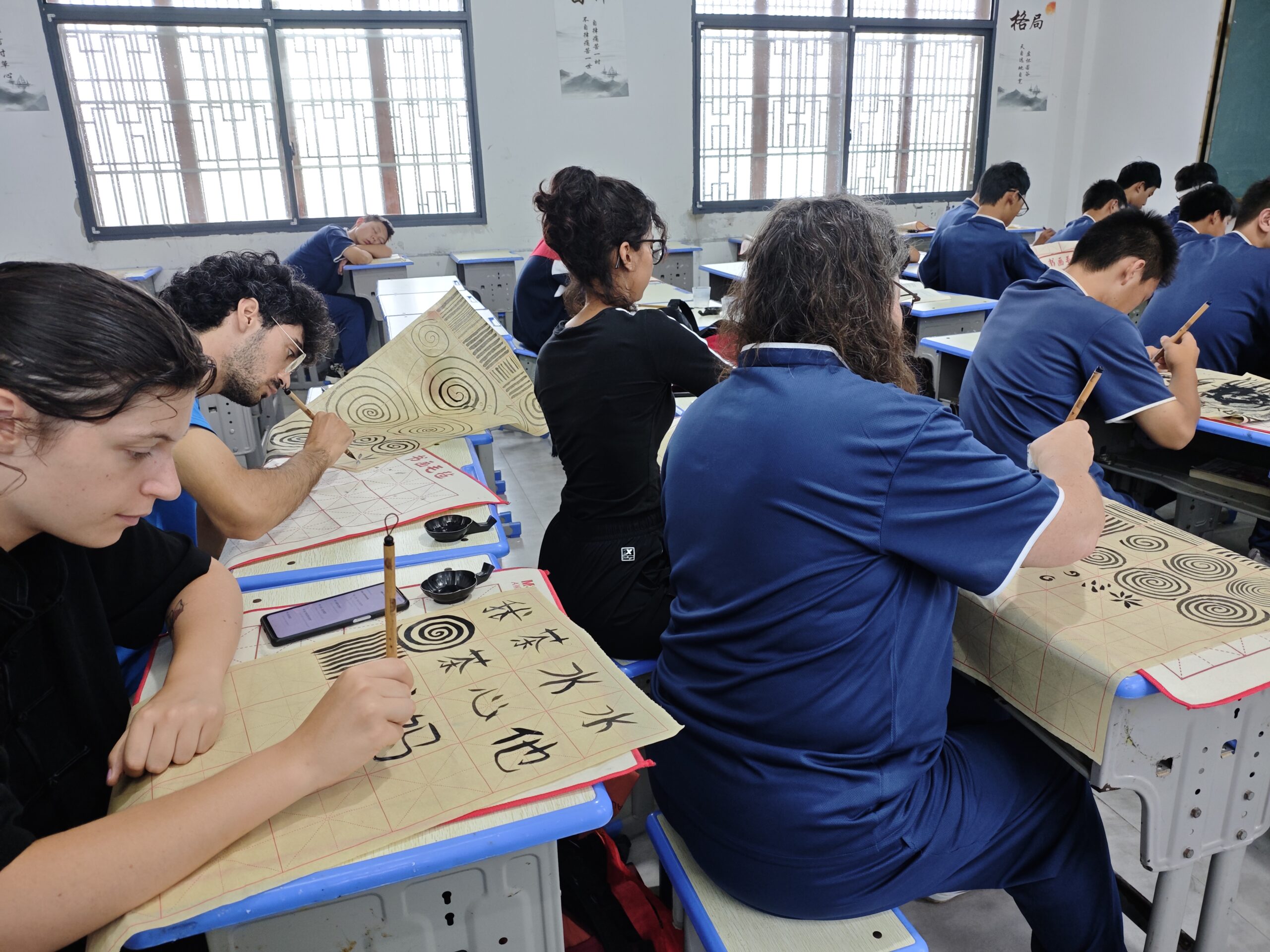
- Cultural courses attended alongside Chinese students
The days began at dawn, often surrounded by the mist covering the Wudang Mountains. After the first gathering in the courtyard, the day naturally unfolded between morning training, afternoon technical work, stretching, repetition and corrections.
Community life follows a different rhythm: less comfort, more discipline and above all a deep immersion in the practice. The adaptation was not always easy. Heat, accumulated fatigue, the intensity of the training sessions and the language barrier sometimes made the first days demanding. But the group held strong. With determination, humility and respect for the culture that welcomed them, everyone gradually adapted to this new environment.
Their video report also shows the other side of this immersion: laughter in the dormitories, spontaneous karaoke nights, late conversations around a cup of tea near the cabins, and simple moments that often become the most meaningful memories. It is precisely this balance between discipline and joy that shaped their experience. As they say in the video: “a great human adventure.”
A Complete Martial Training: External and Internal
During four weeks, this martial arts training in the Wudang Mountains offered students a complete formation combining external practice, internal work and physical conditioning. The goal was not simply to accumulate techniques but to understand the deeper coherence of Chinese martial arts.
- Traditional Kung Fu
- Tai Ji Quan
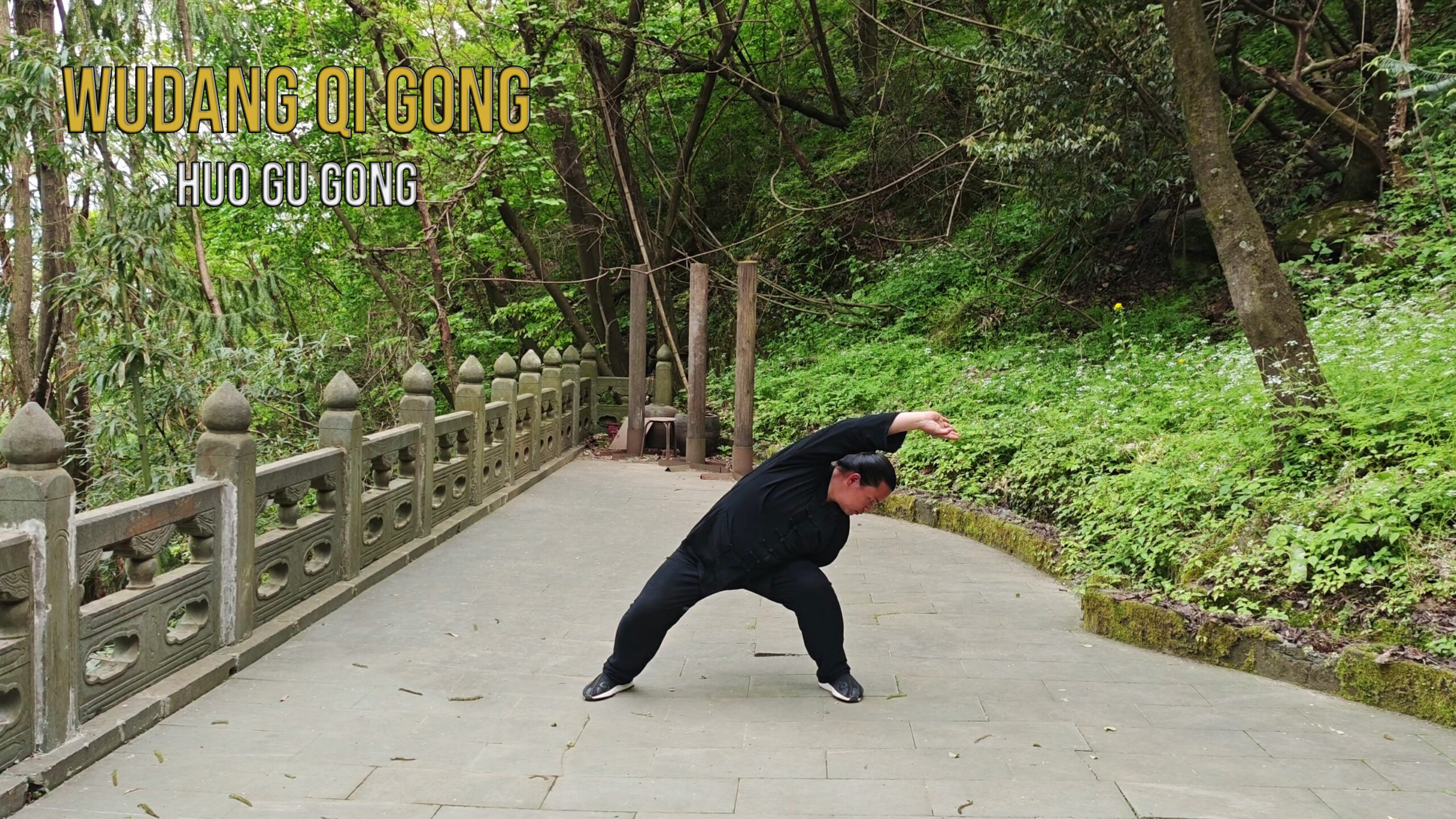
- Qi Gong
- Sanda
- Conditioning training
- Brick breaking practice
- Preparation for the final examination
The mornings were often dedicated to technical work on forms: repetition of movements, precise corrections, adjustments of gaze, body positioning and the accuracy of footwork. In this patient learning process, every detail mattered.
Under the guidance of Zhang Xu, specialist of taolu, the students deepened the rigor and structure of their forms. With Kun, the work took a more internal dimension: breathing, relaxation of the body, circulation of energy and understanding of the rhythm specific to internal arts.
The program also included combat training. Guided by Chen Dong, specialist of sanda and hard qi gong, the students worked on strikes, footwork and distance management, discovering the more direct and dynamic aspect of the practice. However, the teaching did not rely only on these three instructors. Many other teachers from the school contributed throughout the month, each bringing their own expertise and perspective.
Forms and combat. Internal and external. Breath and impact.
The Second Week: An Unexpected Opportunity
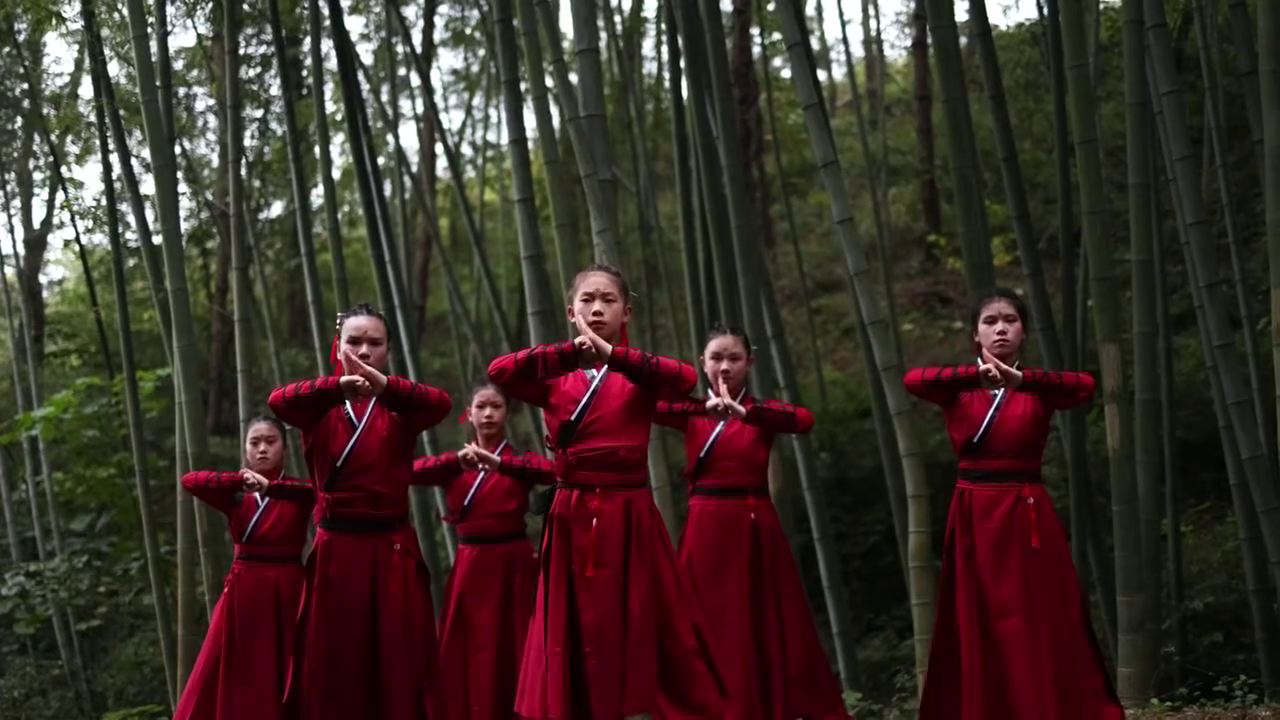
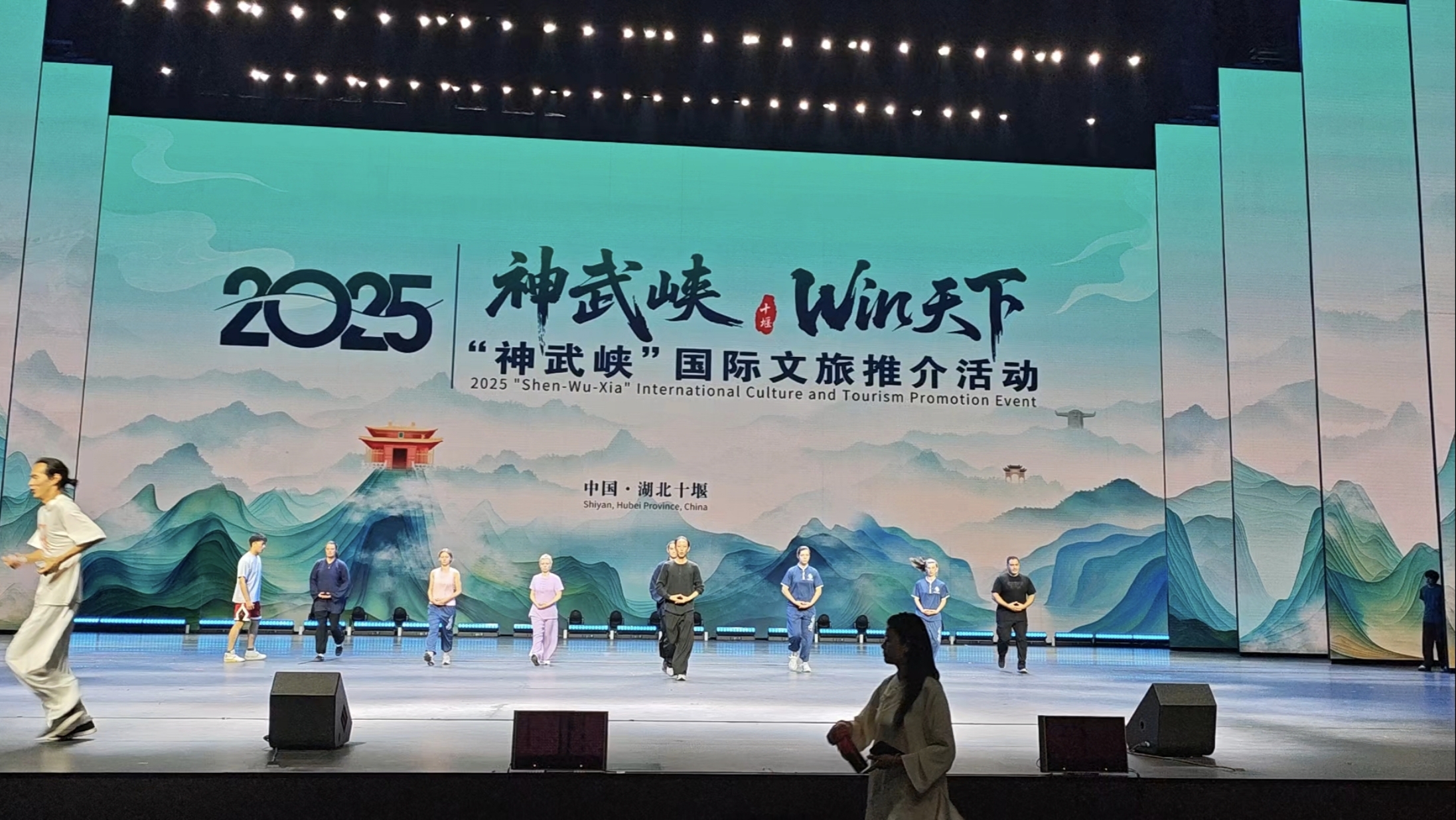
In the middle of this month-long immersion in the Wudang Mountains, a rare opportunity appeared: participating in a special edition of the show Wudang Yi Meng ( 武当一梦 ), a major theatrical production celebrating the martial arts and culture of Mount Wudang.
The announcement surprised everyone. Everything then moved very quickly: a video casting, a selection process and three intense days of rehearsals in the largest theatre of Wudang. The students found themselves entering a new world combining stage preparation, synchronized movement and the collective discipline required for professional performances.
On July 11th 2025, several members of the group stepped onto the stage to demonstrate Tai Ji Quan in front of an audience composed of Chinese and international leaders. In the silence of the theatre, every movement became sharper and every breath more focused. This unexpected moment quickly became one of the highlights of the journey, a unique experience that left a strong impression.
The transition from visitors to performers.
Culture, Transmission and Discovery
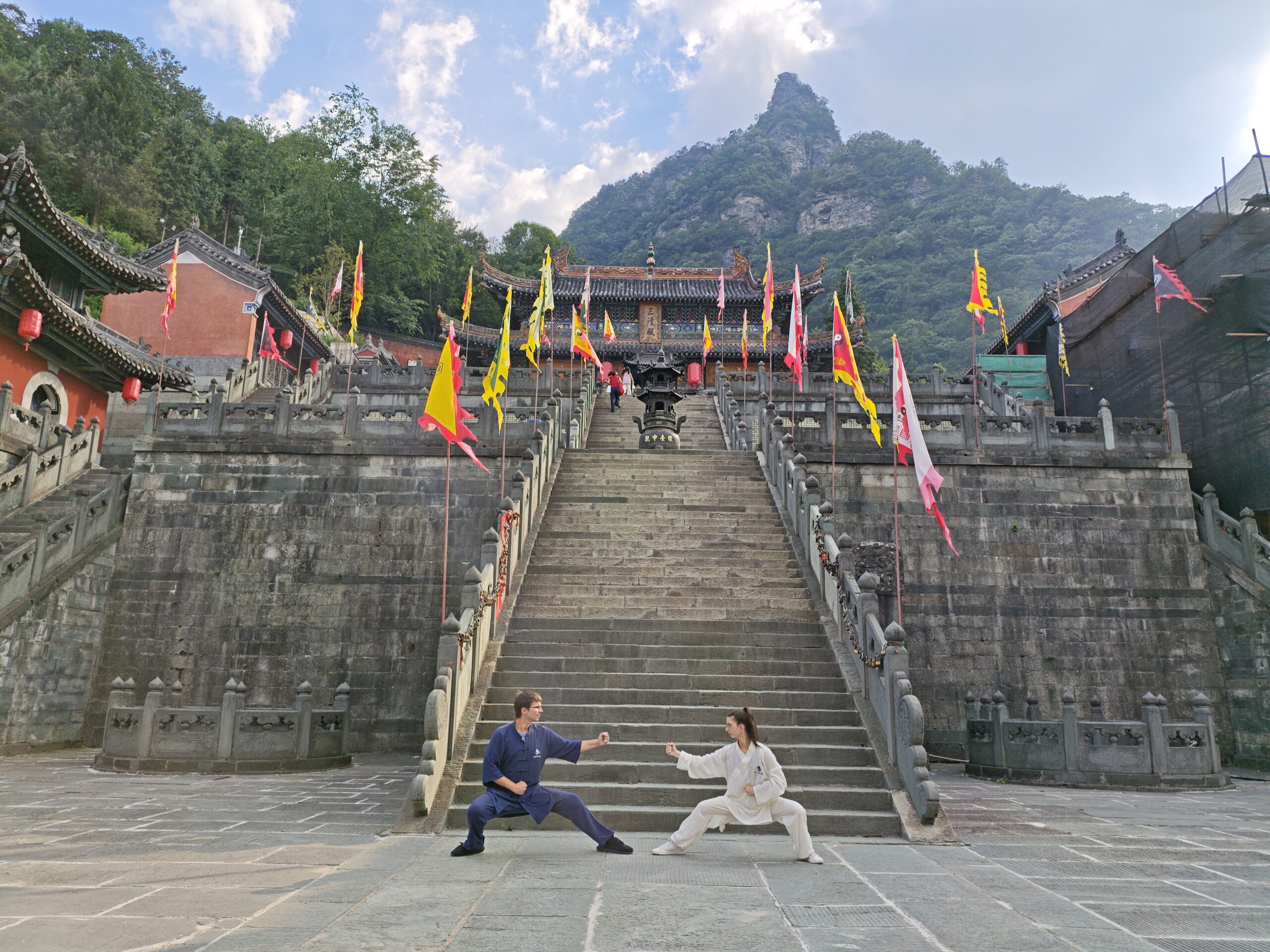
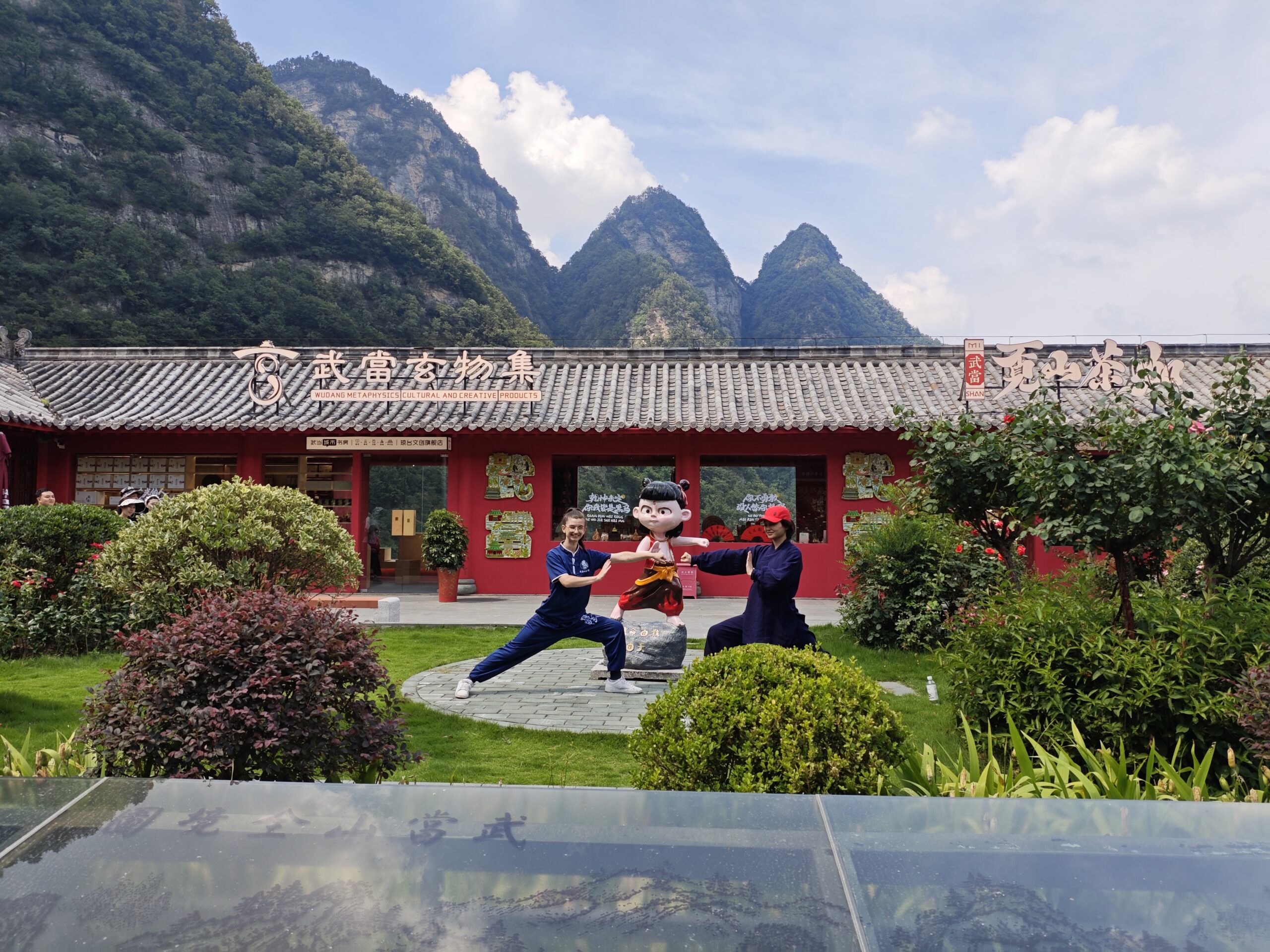
Immersion in the Wudang Mountains was not limited to martial training. The stay was also an opportunity to explore the iconic locations of this sacred mountain and to better understand the cultural environment in which Taoist martial arts were born.
- Yu Xu Palace
- Xiao Yao Valley
- Ancient temples built on the mountain cliffs
- The sacred forests where they hung their wishes
But the most meaningful discoveries often came from simple moments: sharing a hotpot meal, practicing calligraphy in silence, listening to the sound of the guqin echoing across the mountains, or playing a quiet game of Go. Gradually the students realized that martial practice is not limited to techniques. It is deeply connected to culture, philosophy and a way of life.
To understand Kung Fu is also to understand the culture that shaped it.
Transformation and Validation
Among the memorable moments of the stay, the brick-breaking practice led by Chen Dong left a strong impression. The goal was not spectacle but to measure the real effects of a month of intense training in the Wudang Mountains. Body structure, precise technique, breathing and concentration all converge in this symbolic exercise. Several students successfully broke their first brick.
A symbol not of brute strength but of the union between technique, patience and intention.
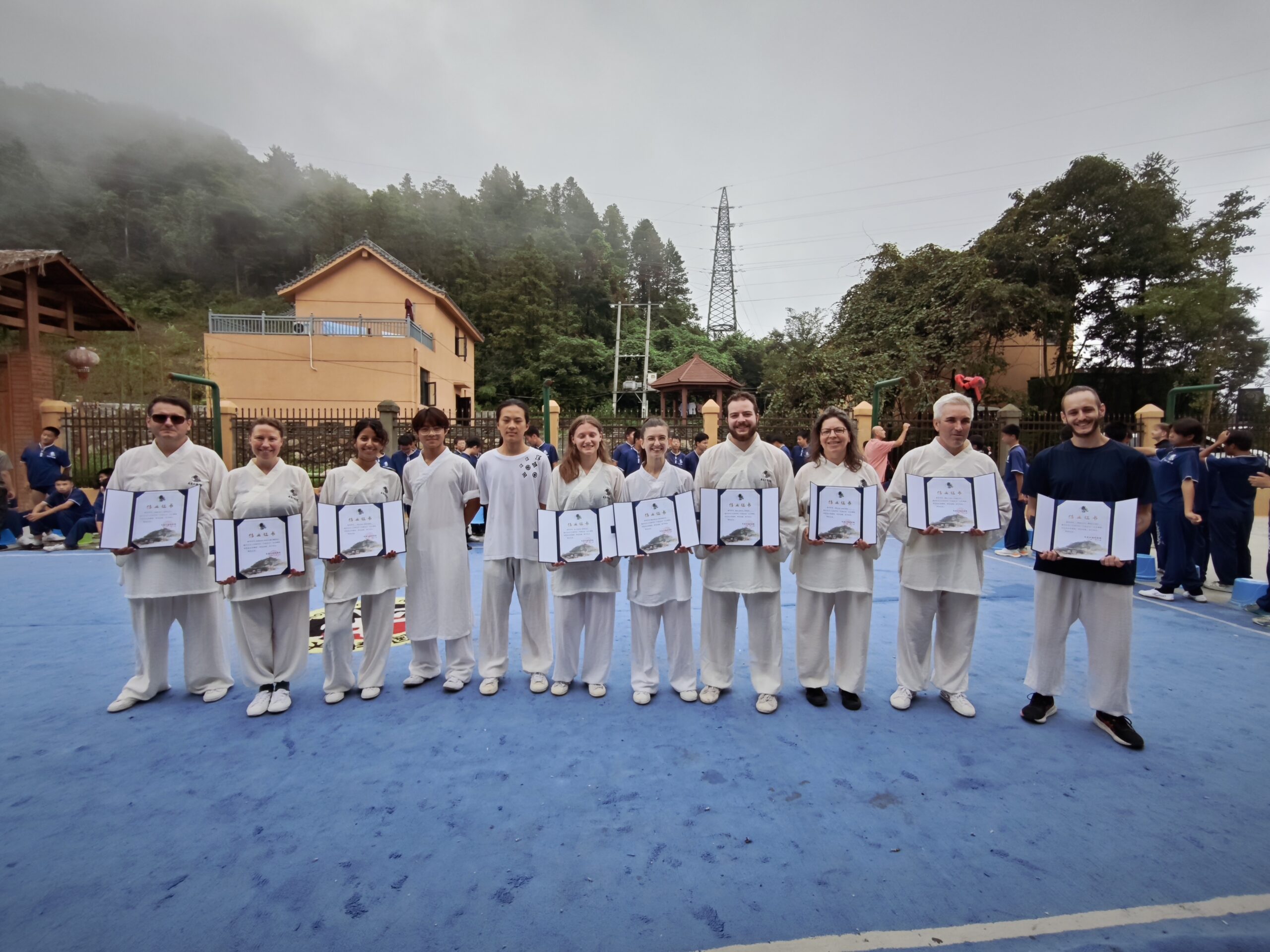
At the end of the stay, the students also completed their final Chinese training examination and all successfully passed. Beyond the certificate, it was above all the confirmation of a month fully lived, rich in learning, encounters and memorable experiences.
🎥 The Full KFAMC Documentary
The KFAMC students created their own documentary retracing this kung fu training in China and their immersion in the Wudang Mountains.
A sincere, human and powerful testimony.